Background
Industrial operations produce wastewater to a varying scale in Bangladesh. This wastewater, commonly known as effluent, is managed to return to the environment through appropriate treatment. Otherwise, they act as one of the most major sources of water and environmental pollution particularly in urban and industrial areas. Wastewater management regulations are developed and practiced to limit the pollutant concentration level. Any industry, which produces wastewater, requires installation and operation of ETP to treat its wastewater before releasing to the receiving stream. The treated water must comply the national water discharge quality standards for the industries and projects.
Proposed Solution
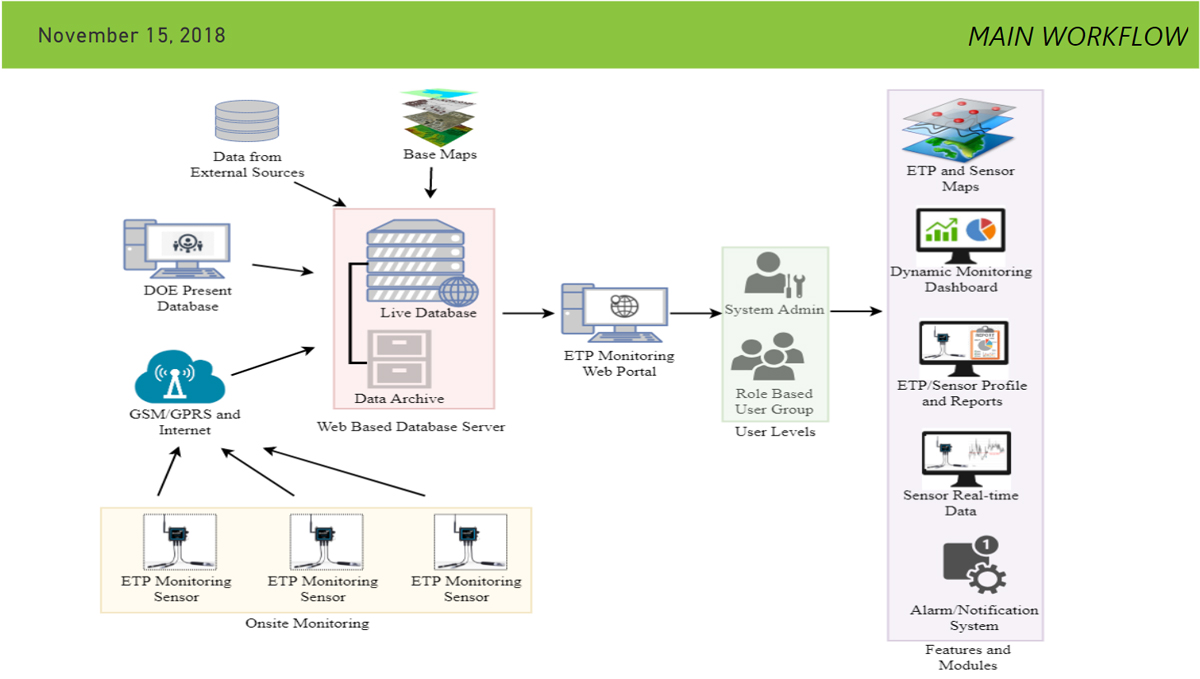
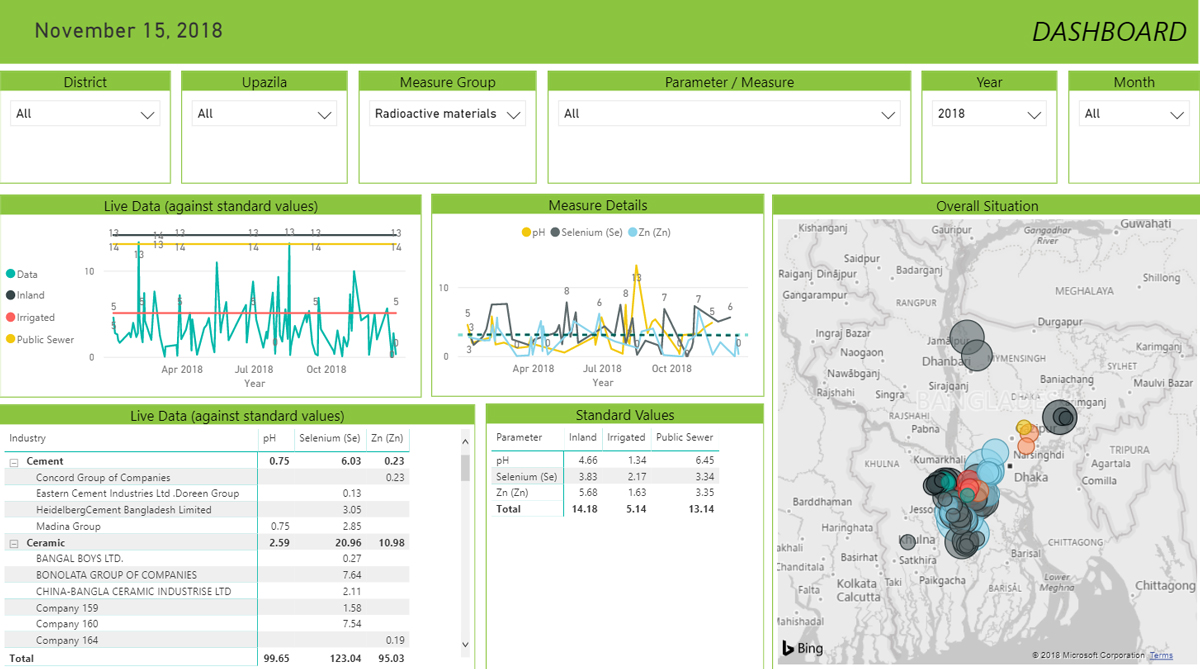
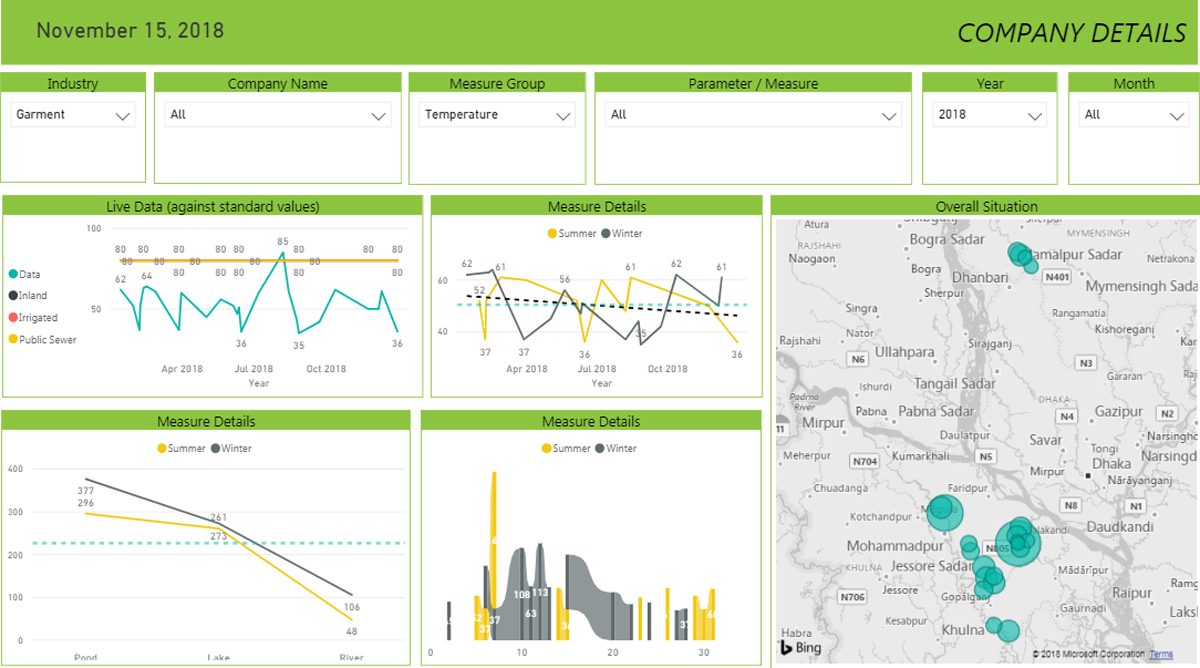
Streams Tech proposes a web-based ETP monitoring system to efficiently track and manage effluent quality for the DOE. The proposed system will include installation of advanced IoT enabled sensors to collect and record wastewater quality data. In addition, the system will use a GIS platform to visualize, search and identify, map, make geospatial queries and provide essential decision support to effectively manage and control operations of ETPs. The web-based system will be responsive across a wide range of internet accessible devices for use e.g. laptops, desktops, tablets, smart phones, etc., and will ensure interoperability for application with other utilities if necessary. The water quality monitoring database will be centrally hosted to a reliable server or cloud, and managed by only authorized administrators of the DOE.
The components of the monitoring system will be configured in such way that they require minimal learning curve and intervention in use or reporting. On the application side, there will be a rolebased user module configured to control access and use-permission to the system. We, at Streams Tech, have experience in designing and developing similar systems, and successfully delivered for operation by our clients. The following section provides our proposed system architecture of the solution and its different functional modules.